Public Domain and Royalty-Free Music: The Decisions That Matter
The difference between music in the public domain, which anyone may use, and royalty-free music, which is licensed for use without per-use royalties but still under copyright.
 MediaScaleUp Editorial Team
At a glance
- Public domain works whose copyright has expired or never existed
- Compositions and recordings have separate copyrights
- Royalty-free a license, not an absence of copyright
- Sound recordings the Music Modernization Act changed protection for older recordings
Why it matters
Why it matters: Confusing the two leads to copyright claims, and a public domain composition may still have a copyrighted recording.
Best practice
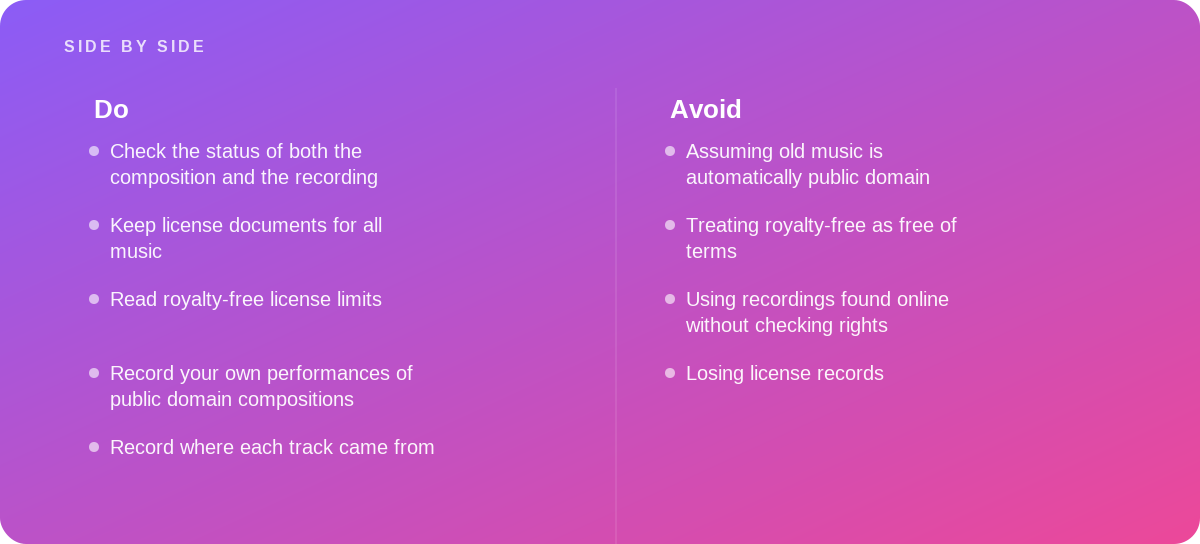
- Check the status of both the composition and the recording
- Keep license documents for all music
- Read royalty-free license limits
- Record your own performances of public domain compositions
- Record where each track came from
Common pitfalls
Watch out for:
- Assuming old music is automatically public domain
- Treating royalty-free as free of terms
- Using recordings found online without checking rights
- Losing license records
When to call in a specialist
Bottom line Bring in help when music rights are unclear, or when content receives copyright claims.
Where this comes from
- U.S. Copyright Office — Duration of copyright
- U.S. Copyright Office — Music Modernization Act
The figures and practices above come from the sources listed.
Working on something like this?
We take on Audio Editing & Production work for teams who want it done once, properly. Tell us what you are building and we will tell you honestly whether we are the right studio for it. Start a project.
Where to go next
Spotted something wrong? Report an error on this page. We correct on the page and say what changed.