Photographing Toys and Children's Products: What Actually Works
Product photography for toys, games and children's equipment.
 MediaScaleUp Editorial Team
What is at stake
Children's products carry safety marking requirements, and imagery must not imply unsafe or unsupervised use.
The playbook
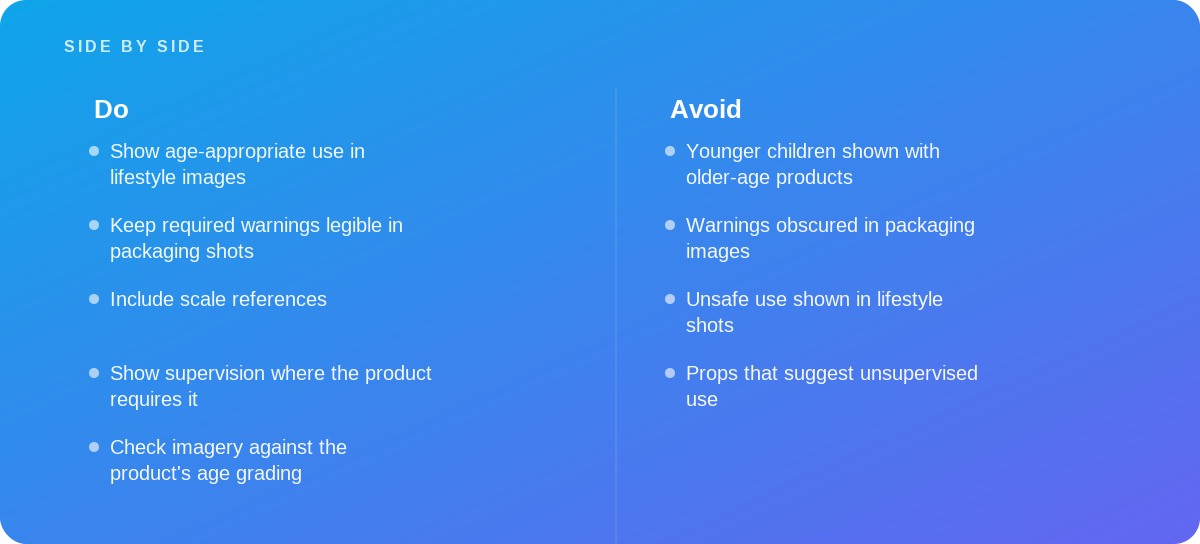
- Show age-appropriate use in lifestyle images
- Keep required warnings legible in packaging shots
- Include scale references
- Show supervision where the product requires it
- Check imagery against the product's age grading
Where it goes wrong
Avoid:
- Younger children shown with older-age products
- Warnings obscured in packaging images
- Unsafe use shown in lifestyle shots
- Props that suggest unsupervised use
The numbers behind it
| Measure | Figure |
|---|---|
| Safety warnings | children's products carry required warnings and labels |
| Age grading | products are designed for specific age ranges |
| Imagery | photographs should show safe, age-appropriate use |
| Small parts | warnings apply to products with small parts |
Getting outside help
When to hand it over: Bring in help when photographing products for children.
Where this comes from
- U.S. Consumer Product Safety Commission — Business guidance
- Federal Trade Commission — Advertising FAQs: A guide for small business
The figures and practices above come from the sources listed.
Working on something like this?
We take on Photography & Product Visuals work for teams who want it done once, properly. Tell us what you are building and we will tell you honestly whether we are the right studio for it. Start a project.
Where to go next
Spotted something wrong? Report an error on this page. We correct on the page and say what changed.