Marketing Data and Reporting: What Actually Works
Bringing data from several platforms into a report that answers a business question.
 MediaScaleUp Editorial Team

What is at stake
Every platform reports in its own favor, and summing them produces a number larger than the truth.
The playbook
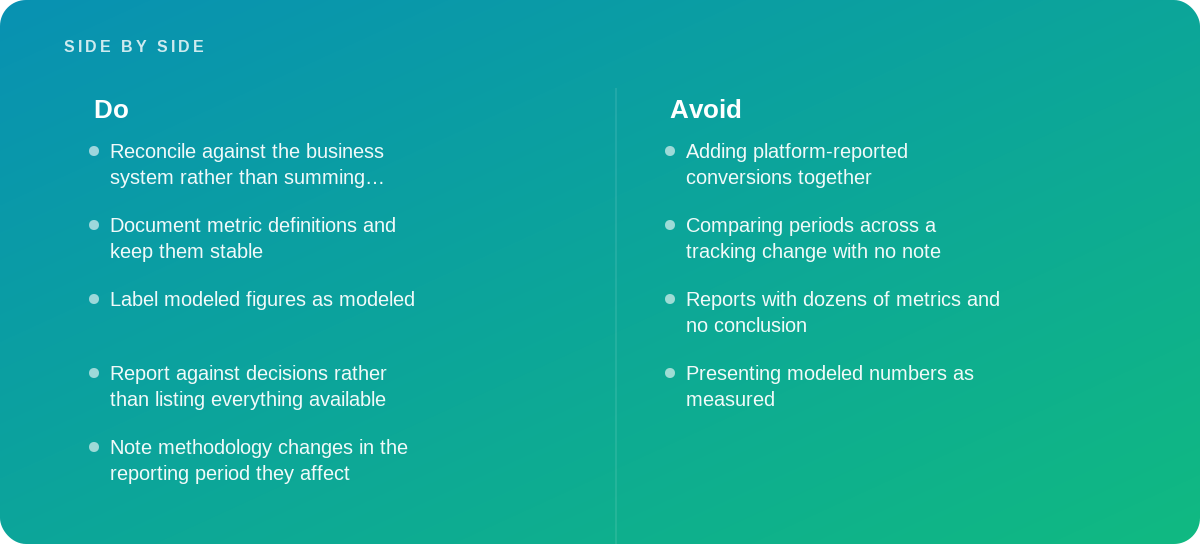
- Reconcile against the business system rather than summing platforms
- Document metric definitions and keep them stable
- Label modeled figures as modeled
- Report against decisions rather than listing everything available
- Note methodology changes in the reporting period they affect
Where it goes wrong
Avoid:
- Adding platform-reported conversions together
- Comparing periods across a tracking change with no note
- Reports with dozens of metrics and no conclusion
- Presenting modeled numbers as measured
The numbers behind it
| Measure | Figure |
|---|---|
| Double counting | platforms each claim conversions they touched |
| Source of truth | should be the business system, not a platform |
| Definitions | metrics with the same name differ between platforms |
| Modeled data | increasingly common and not directly comparable to measured data |
| Consistency | period comparisons require stable definitions |
Getting outside help
When to hand it over: Bring in help when reported conversions exceed actual orders, when platforms disagree materially, or when reporting cannot support budget decisions.
Where this comes from
- Google Analytics Help — Data comparison and modeling
- Google Ads Help — Conversion reporting
- Google Search Central — Search Console data
The figures and practices above come from the sources listed.
Working on something like this?
We take on Digital Marketing & CRO work for teams who want it done once, properly. Tell us what you are building and we will tell you honestly whether we are the right studio for it. Start a project.
Where to go next
Spotted something wrong? Report an error on this page. We correct on the page and say what changed.