How to Get Customer Lifecycle Marketing Right
Planning communication across the whole relationship — acquisition, onboarding, retention, expansion and win-back.
 Samir Haddad

At a glance
- Stages acquisition, activation, retention, expansion and reactivation
- Retention economics retaining a customer is generally cheaper than acquiring one
- Activation the point at which a customer has experienced the value
- Churn signals usually visible in behavior before cancellation
- Win-back has a limited useful window
Why it matters
Why it matters: Most marketing effort goes into acquisition while most available value sits in retention, because acquisition is easier to attribute.
Best practice
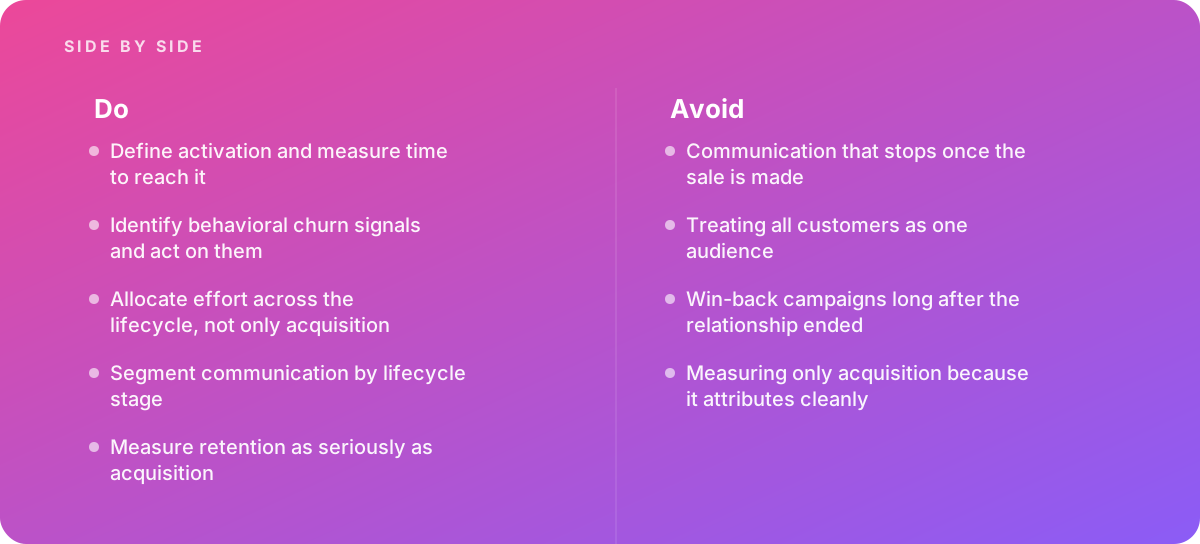
- Define activation and measure time to reach it
- Identify behavioral churn signals and act on them
- Allocate effort across the lifecycle, not only acquisition
- Segment communication by lifecycle stage
- Measure retention as seriously as acquisition
Common pitfalls
Watch out for:
- Communication that stops once the sale is made
- Treating all customers as one audience
- Win-back campaigns long after the relationship ended
- Measuring only acquisition because it attributes cleanly
When to call in a specialist
Bottom line Bring in help when churn is high, when nobody owns post-sale communication, or when lifecycle stages are not defined in the data.
Where this comes from
- Mailchimp — Lifecycle marketing
- Nielsen Norman Group — Customer experience research
- Google Analytics Help — Cohort and retention reporting
The figures and practices above come from the sources listed.
Working on something like this?
We take on Digital Marketing & CRO work for teams who want it done once, properly. Tell us what you are building and we will tell you honestly whether we are the right studio for it. Start a project.
Where to go next
Spotted something wrong? Report an error on this page. We correct on the page and say what changed.