How to Get Packaging Design Right
Designing the physical container a product arrives in, within the constraints of manufacture, regulation and shelf.
 MediaScaleUp Editorial Team
What is at stake
Packaging is constrained by production process and law before it is a design problem, and a design that ignores those constraints cannot be made.
The playbook
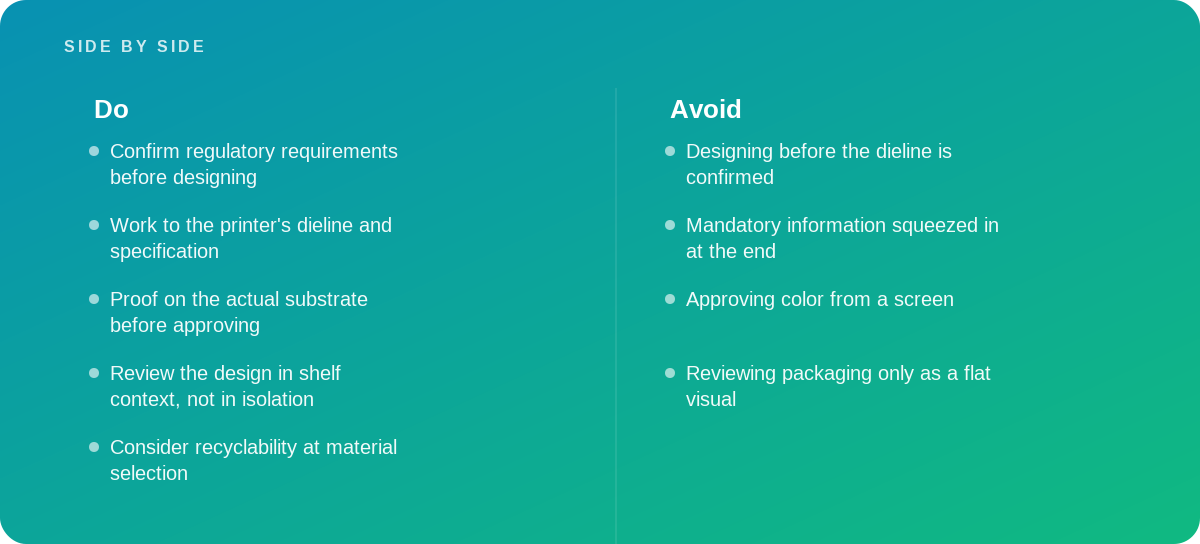
- Confirm regulatory requirements before designing
- Work to the printer's dieline and specification
- Proof on the actual substrate before approving
- Review the design in shelf context, not in isolation
- Consider recyclability at material selection
Where it goes wrong
Avoid:
- Designing before the dieline is confirmed
- Mandatory information squeezed in at the end
- Approving color from a screen
- Reviewing packaging only as a flat visual
The numbers behind it
| Measure | Figure |
|---|---|
| Regulatory content | many categories have mandatory information and minimum type sizes |
| Print process | determines color, substrate and finishing options |
| Dielines | the flat template a package is made from |
| Shelf context | packaging is judged in situ, against competitors |
| Sustainability | material choice affects recyclability and increasingly regulation |
Getting outside help
When to hand it over: Bring in help when regulatory requirements are unclear, when print results do not match approval, or when a range needs consistent packaging across formats.
Where this comes from
- European Commission — Product labeling requirements
- ISO — Packaging and printing standards
- International Color Consortium — Print color management
The figures and practices above come from the sources listed.
Working on something like this?
We take on Brand & Identity Design work for teams who want it done once, properly. Tell us what you are building and we will tell you honestly whether we are the right studio for it. Start a project.
Where to go next
Spotted something wrong? Report an error on this page. We correct on the page and say what changed.