Handheld Light Meters, Done Properly
Measuring light with a separate meter rather than relying on the camera's reading.
 MediaScaleUp Editorial Team
What is at stake
Meters give absolute readings that make studio lighting repeatable, which camera metering cannot.
The playbook
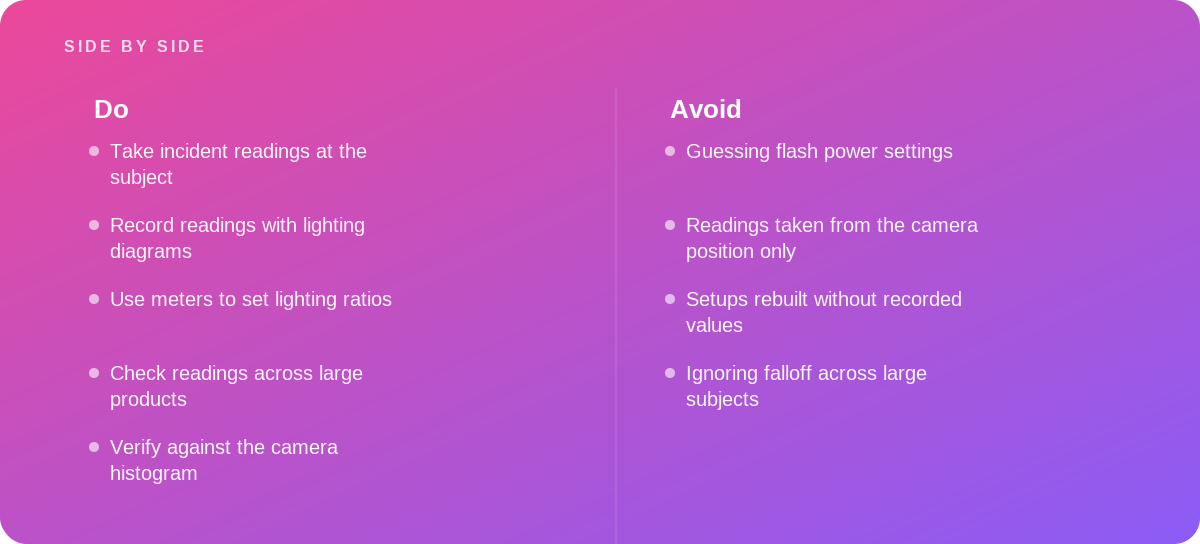
- Take incident readings at the subject
- Record readings with lighting diagrams
- Use meters to set lighting ratios
- Check readings across large products
- Verify against the camera histogram
Where it goes wrong
Avoid:
- Guessing flash power settings
- Readings taken from the camera position only
- Setups rebuilt without recorded values
- Ignoring falloff across large subjects
The numbers behind it
| Measure | Figure |
|---|---|
| Incident readings | measure light falling on the subject |
| Reflected readings | measure light bouncing off it |
| Flash metering | meters can measure flash exposure |
| Repeatability | recorded readings let setups be rebuilt |
Getting outside help
When to hand it over: Bring in help when studio lighting must be repeatable.
Where this comes from
- Adobe Help Center — Photography basics
- Capture One — Learning resources
The figures and practices above come from the sources listed.
Working on something like this?
We take on Photography & Product Visuals work for teams who want it done once, properly. Tell us what you are building and we will tell you honestly whether we are the right studio for it. Start a project.
Where to go next
Spotted something wrong? Report an error on this page. We correct on the page and say what changed.