Ghostwriting and Attribution, Done Properly
Writing content published under someone else's name, common for executives and subject experts.
 MediaScaleUp Editorial Team

Where most projects go wrong
The usual mistakes:
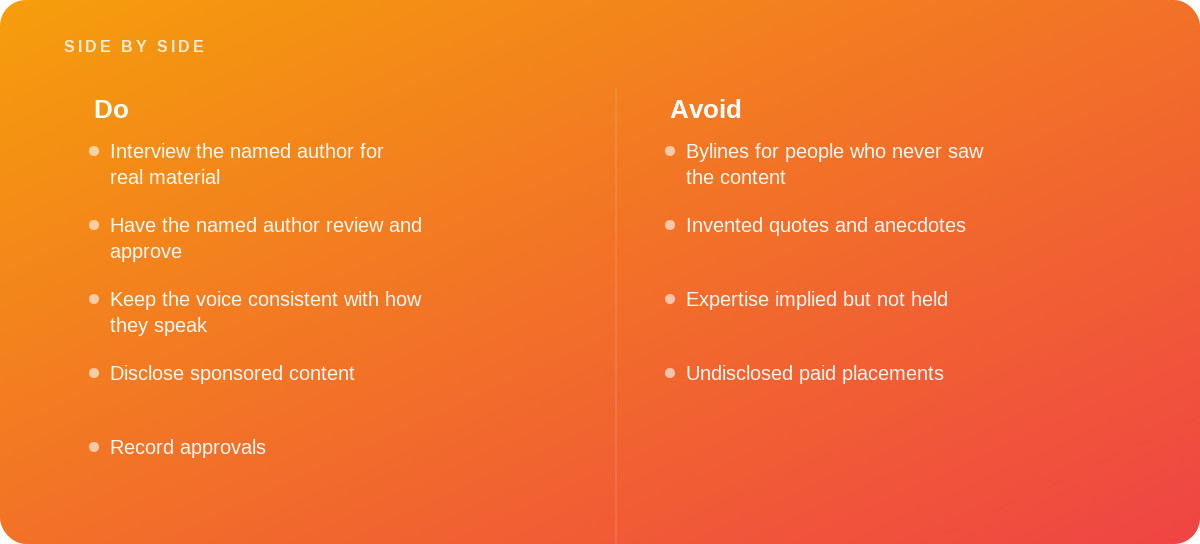
- Bylines for people who never saw the content
- Invented quotes and anecdotes
- Expertise implied but not held
- Undisclosed paid placements
What good looks like instead
- Interview the named author for real material
- Have the named author review and approve
- Keep the voice consistent with how they speak
- Disclose sponsored content
- Record approvals
Why it matters
Ghostwriting is normal practice, but attribution should still be honest about expertise and, where relevant, connections.
The specs that matter
| Measure | Figure |
|---|---|
| Bylines | readers judge credibility partly by the author |
| Expertise | the named author should stand behind the content |
| Interviews | good ghostwriting starts from the expert's own words |
| Disclosure | sponsored or paid content needs identification |
Knowing when to hand it over
Tip: Bring in help when executives publish regularly.
Where this comes from
- Federal Trade Commission — FTC's Endorsement Guides: What People Are Asking
- Google Search Central — Creating helpful, reliable, people-first content
The figures and practices above come from the sources listed.
Working on something like this?
We take on Content Strategy work for teams who want it done once, properly. Tell us what you are building and we will tell you honestly whether we are the right studio for it. Start a project.
Where to go next
Spotted something wrong? Report an error on this page. We correct on the page and say what changed.