Fine Art Printing: What Actually Works
Producing high-quality prints of photographs and artwork on archival papers with pigment inks.
 MediaScaleUp Editorial Team

Why does it matter?
Fine art printing has different requirements from commercial print, especially in longevity and color control.
What are the numbers?
- Pigment inks generally outlast dye inks
- Paper profiles each paper and printer pairing has its own profile
- Test prints small proofs check tone and color before full size
- Handling prints need careful handling and storage
What should I do?
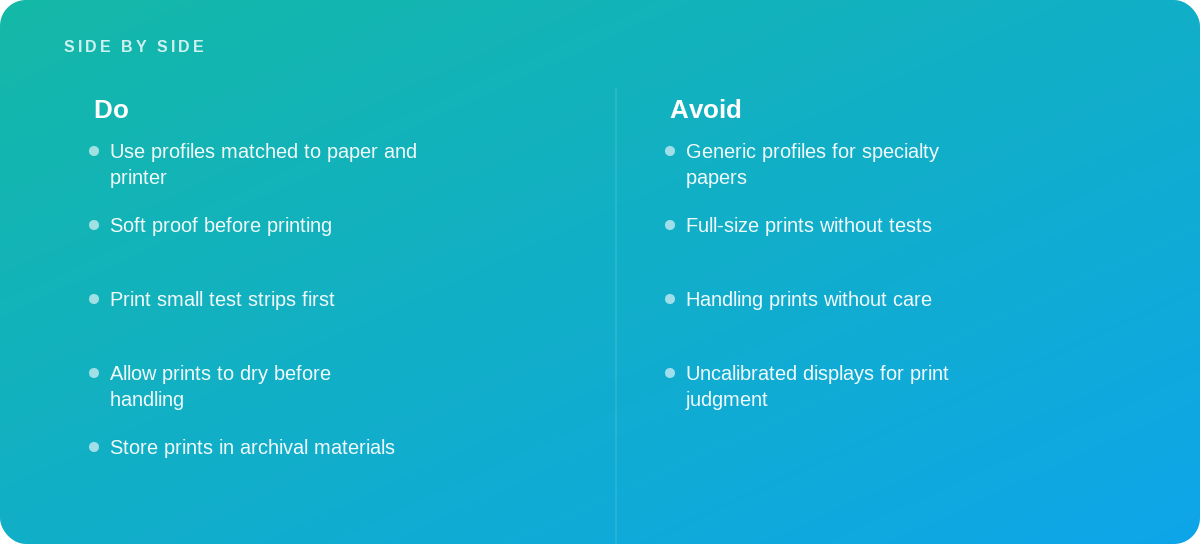
- Use profiles matched to paper and printer
- Soft proof before printing
- Print small test strips first
- Allow prints to dry before handling
- Store prints in archival materials
What should I avoid?
Avoid:
- Generic profiles for specialty papers
- Full-size prints without tests
- Handling prints without care
- Uncalibrated displays for print judgment
When should I get help?
Short answer Bring in help when producing prints for sale or exhibition.
Where this comes from
- International Color Consortium — Introduction to the ICC profile format
- Adobe Help Center — Photoshop User Guide
The figures and practices above come from the sources listed.
Working on something like this?
We take on Image Editing & Retouching work for teams who want it done once, properly. Tell us what you are building and we will tell you honestly whether we are the right studio for it. Start a project.
Where to go next
Spotted something wrong? Report an error on this page. We correct on the page and say what changed.