A Practical Guide to Video Color Spaces
The color standards that define how video colors are encoded and displayed, such as Rec. 709 for HD, Rec. 2020 for UHD and DCI-P3 for cinema.
 Tomas Lindqvist

What is at stake
Video graded in one color space and delivered in another looks wrong, so every stage needs to agree on the space in use.
The playbook
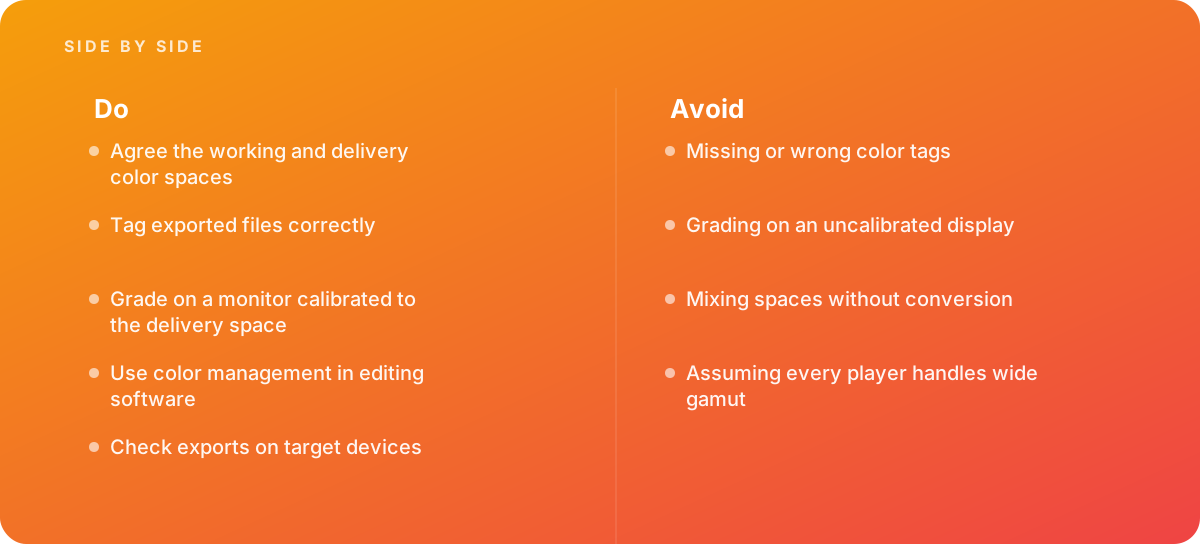
- Agree the working and delivery color spaces
- Tag exported files correctly
- Grade on a monitor calibrated to the delivery space
- Use color management in editing software
- Check exports on target devices
Where it goes wrong
Avoid:
- Missing or wrong color tags
- Grading on an uncalibrated display
- Mixing spaces without conversion
- Assuming every player handles wide gamut
The numbers behind it
| Measure | Figure |
|---|---|
| Rec. 709 | the standard for HD video, defined in ITU-R BT.709 |
| Rec. 2020 | a wider gamut for UHD, defined in ITU-R BT.2020 |
| DCI-P3 | the digital cinema color space |
| Metadata | files carry color tags that players use to display them correctly |
Getting outside help
When to hand it over: Bring in help when colors shift between editing software, exports and platforms.
Where this comes from
- International Telecommunication Union — ITU-R BT.709
- International Telecommunication Union — ITU-R BT.2020
- Blackmagic Design — DaVinci Resolve color management
The figures and practices above come from the sources listed.
Working on something like this?
We take on Video Editing & Production work for teams who want it done once, properly. Tell us what you are building and we will tell you honestly whether we are the right studio for it. Start a project.
Where to go next
Spotted something wrong? Report an error on this page. We correct on the page and say what changed.