A Practical Guide to Trade Dress
The distinctive look and feel of a product or its packaging, such as shape, color combinations or design, which can be protected like a trademark.
 MediaScaleUp Editorial Team
Where most projects go wrong
The usual mistakes:
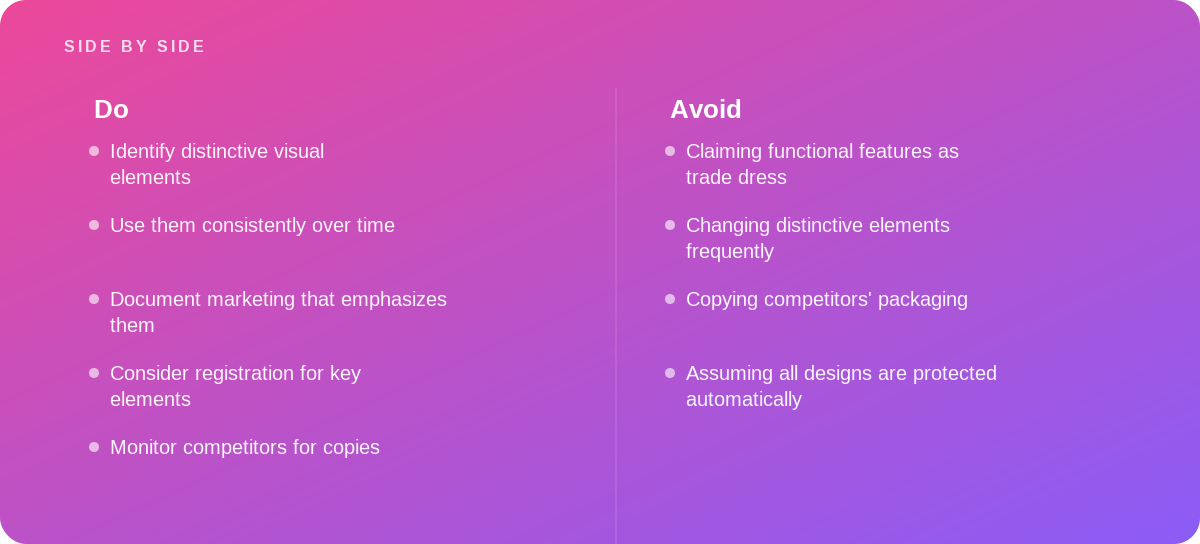
- Claiming functional features as trade dress
- Changing distinctive elements frequently
- Copying competitors' packaging
- Assuming all designs are protected automatically
What good looks like instead
- Identify distinctive visual elements
- Use them consistently over time
- Document marketing that emphasizes them
- Consider registration for key elements
- Monitor competitors for copies
Why it matters
Distinctive packaging and product design can be valuable brand assets, but protection requires distinctiveness and non-functionality.
The specs that matter
| Measure | Figure |
|---|---|
| Definition | the overall appearance of a product or packaging |
| Requirements | distinctiveness and not being functional |
| Registration | trade dress can be registered with the USPTO |
| Product design | usually requires proof of acquired distinctiveness |
Knowing when to hand it over
Tip: Bring in help when packaging or product design is central to your brand.
Where this comes from
- United States Patent and Trademark Office — Trademark basics
- World Intellectual Property Organization — Industrial designs
The figures and practices above come from the sources listed.
Working on something like this?
We take on Brand & Identity Design work for teams who want it done once, properly. Tell us what you are building and we will tell you honestly whether we are the right studio for it. Start a project.
Where to go next
Spotted something wrong? Report an error on this page. We correct on the page and say what changed.