A Practical Guide to Scoping a Website Project
Defining what a website project includes before work begins.
 MediaScaleUp Editorial Team

What is at stake
Scope decides cost and timeline, and unscoped assumptions surface as disputes later.
The playbook
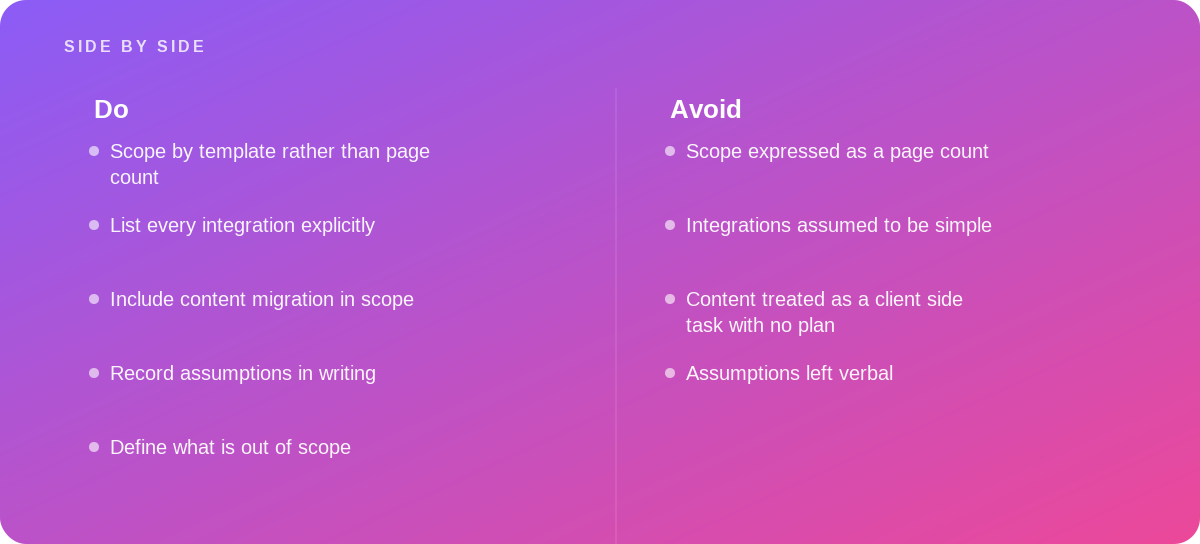
- Scope by template rather than page count
- List every integration explicitly
- Include content migration in scope
- Record assumptions in writing
- Define what is out of scope
Where it goes wrong
Avoid:
- Scope expressed as a page count
- Integrations assumed to be simple
- Content treated as a client side task with no plan
- Assumptions left verbal
The numbers behind it
| Measure | Figure |
|---|---|
| Page types | templates drive effort more than page counts |
| Integrations | each external system adds complexity |
| Content | migration and creation are often underestimated |
| Assumptions | should be written down explicitly |
Getting outside help
When to hand it over: Bring in help when projects repeatedly exceed budget.
Where this comes from
- Microsoft Learn — Project management
- U.S. Small Business Administration — Write your business plan
The figures and practices above come from the sources listed.
Working on something like this?
We take on Web Design & Development work for teams who want it done once, properly. Tell us what you are building and we will tell you honestly whether we are the right studio for it. Start a project.
Where to go next
Spotted something wrong? Report an error on this page. We correct on the page and say what changed.







