A Practical Guide to Analytics Event Design
Deciding what user actions to record, what to call them, and what data to attach.
 MediaScaleUp Editorial Team

What is at stake
Event design is a data modeling exercise, and events named ad hoc during implementation produce reports nobody can interpret six months later.
The playbook
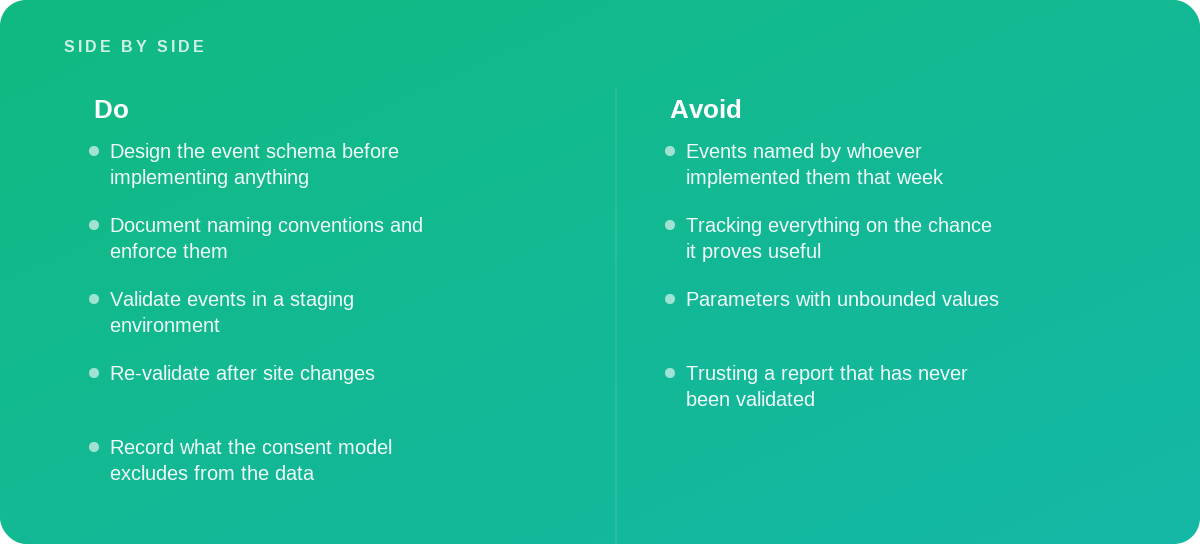
- Design the event schema before implementing anything
- Document naming conventions and enforce them
- Validate events in a staging environment
- Re-validate after site changes
- Record what the consent model excludes from the data
Where it goes wrong
Avoid:
- Events named by whoever implemented them that week
- Tracking everything on the chance it proves useful
- Parameters with unbounded values
- Trusting a report that has never been validated
The numbers behind it
| Measure | Figure |
|---|---|
| Naming | a documented, consistent convention |
| Parameters | the contextual data attached to an event |
| Cardinality | high-cardinality parameters can be unusable in reporting |
| Validation | events should be tested before being relied on |
| Consent | analytics collection is subject to consent rules |
Getting outside help
When to hand it over: Bring in help when reports disagree, when tracking has broken silently, or when an analytics platform must be migrated without losing comparability.
Where this comes from
- Google Analytics Help — Event collection
- Information Commissioner's Office — Cookies and consent
- Google Search Central — Measurement guidance
The figures and practices above come from the sources listed.
Working on something like this?
We take on Digital Marketing & CRO work for teams who want it done once, properly. Tell us what you are building and we will tell you honestly whether we are the right studio for it. Start a project.
Where to go next
Spotted something wrong? Report an error on this page. We correct on the page and say what changed.