Writing Help Center Articles, Done Properly
Writing self-service support articles that help customers solve problems, complete tasks and understand features without contacting support.
 MediaScaleUp Editorial Team

What is at stake
Good help content reduces support volume and frustration, while unclear articles push customers to contact support anyway.
The playbook
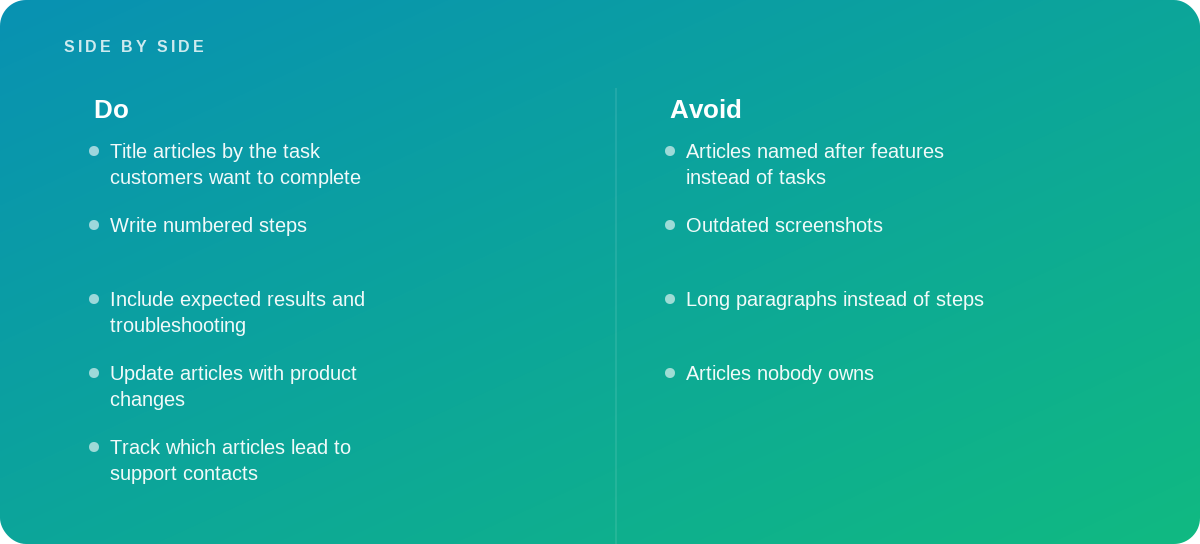
- Title articles by the task customers want to complete
- Write numbered steps
- Include expected results and troubleshooting
- Update articles with product changes
- Track which articles lead to support contacts
Where it goes wrong
Avoid:
- Articles named after features instead of tasks
- Outdated screenshots
- Long paragraphs instead of steps
- Articles nobody owns
The numbers behind it
| Measure | Figure |
|---|---|
| Structure | task-based titles, steps and expected results |
| Search | customers usually arrive through search |
| Screenshots | need updating when interfaces change |
| Measurement | support contact rates after viewing articles |
Getting outside help
When to hand it over: Bring in help when support volume is high for questions the help center should answer.
Where this comes from
- GOV.UK Service Manual — Content design
- Microsoft Learn — Microsoft Writing Style Guide
The figures and practices above come from the sources listed.
Working on something like this?
We take on Content Strategy work for teams who want it done once, properly. Tell us what you are building and we will tell you honestly whether we are the right studio for it. Start a project.
Where to go next
Spotted something wrong? Report an error on this page. We correct on the page and say what changed.