Patient Forms and HIPAA Online: The Decisions That Matter
Collecting patient information through website forms in a way that meets federal health privacy rules.
 MediaScaleUp Editorial Team

What is at stake
Ordinary web forms and analytics tools were not built for protected health information, and misconfigured pages have caused reportable breaches.
The playbook
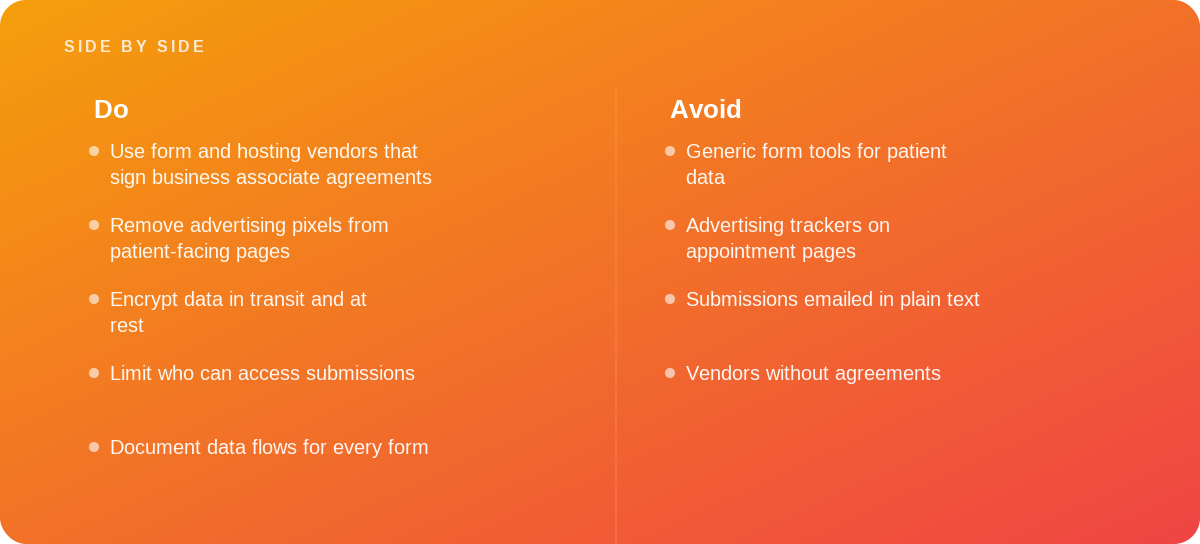
- Use form and hosting vendors that sign business associate agreements
- Remove advertising pixels from patient-facing pages
- Encrypt data in transit and at rest
- Limit who can access submissions
- Document data flows for every form
Where it goes wrong
Avoid:
- Generic form tools for patient data
- Advertising trackers on appointment pages
- Submissions emailed in plain text
- Vendors without agreements
The numbers behind it
| Measure | Figure |
|---|---|
| Protected information | health information that identifies a patient is protected |
| Business associates | vendors handling this data need agreements in place |
| Tracking technologies | analytics and advertising pixels on patient pages can disclose information |
| Transmission | data must be encrypted in transit and at rest |
Getting outside help
When to hand it over: Bring in help before publishing patient-facing forms.
Where this comes from
- U.S. Department of Health and Human Services — HIPAA for professionals
- OWASP — Transport Layer Security Cheat Sheet
The figures and practices above come from the sources listed.
Working on something like this?
We take on Web Design & Development work for teams who want it done once, properly. Tell us what you are building and we will tell you honestly whether we are the right studio for it. Start a project.
Where to go next
Spotted something wrong? Report an error on this page. We correct on the page and say what changed.






