Page Speed and SEO: What Actually Works
The relationship between how fast a page loads and how it performs in search — as a ranking input and, more importantly, as a conversion factor.
 MediaScaleUp Editorial Team

At a glance
- Ranking role page experience, including Core Web Vitals, is one of many signals
- Relative weight content relevance remains far more significant
- Field data what counts, rather than lab scores
- Mobile assessed separately from desktop
- Business effect speed affects conversion and abandonment directly
Why it matters
Why it matters: Speed is a modest ranking signal and a large behavioral one, so the business case rests on conversion rather than on rankings.
Best practice
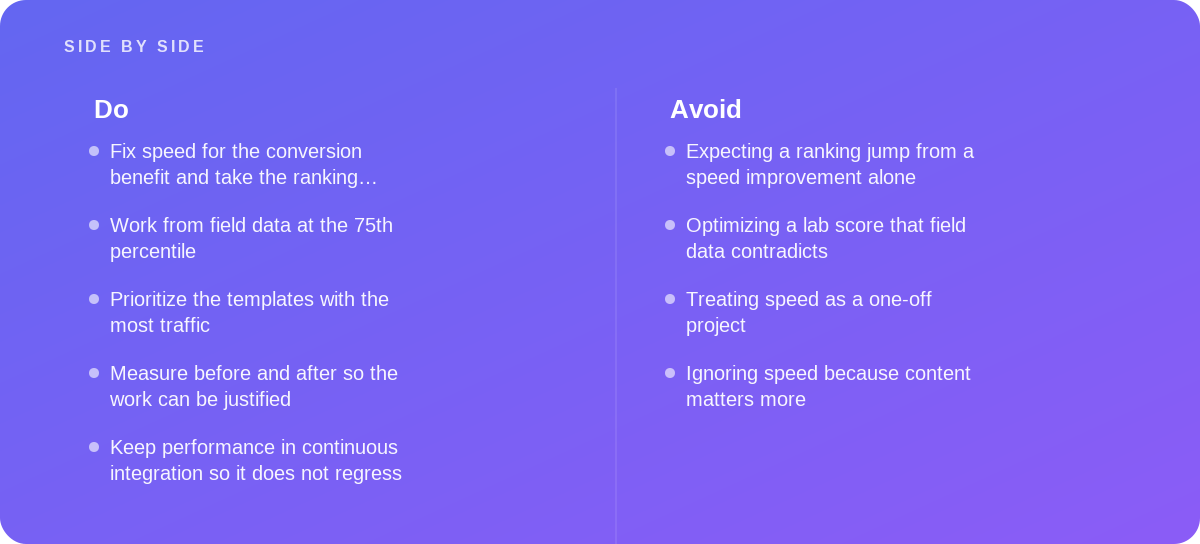
- Fix speed for the conversion benefit and take the ranking benefit as a bonus
- Work from field data at the 75th percentile
- Prioritize the templates with the most traffic
- Measure before and after so the work can be justified
- Keep performance in continuous integration so it does not regress
Common pitfalls
Watch out for:
- Expecting a ranking jump from a speed improvement alone
- Optimizing a lab score that field data contradicts
- Treating speed as a one-off project
- Ignoring speed because content matters more
When to call in a specialist
Bottom line Bring in help when Core Web Vitals are failing at origin level, when performance regressions keep recurring, or when a platform limits what can be improved.
Where this comes from
- Google Search Central — Page experience
- web.dev — Core Web Vitals
- Chrome for Developers — Performance tooling
The figures and practices above come from the sources listed.
Working on something like this?
We take on SEO Services work for teams who want it done once, properly. Tell us what you are building and we will tell you honestly whether we are the right studio for it. Start a project.
Where to go next
Spotted something wrong? Report an error on this page. We correct on the page and say what changed.