Macro Product Photography: What Actually Works
Photographing very small products or fine details at close range, often at or near life-size magnification, such as jewelry, watches, cosmetics and electronic components.
 Imogen Clarke

Why does it matter?
Small products are bought on detail customers cannot see in person, and the physics of close-up photography make that detail hard to capture well.
What are the numbers?
- 1:1 magnification the subject is recorded at life size on the camera sensor
- Depth of field becomes extremely shallow as magnification increases
- Diffraction very small apertures soften fine detail
- Common solution focus stacking to extend sharpness
What should I do?
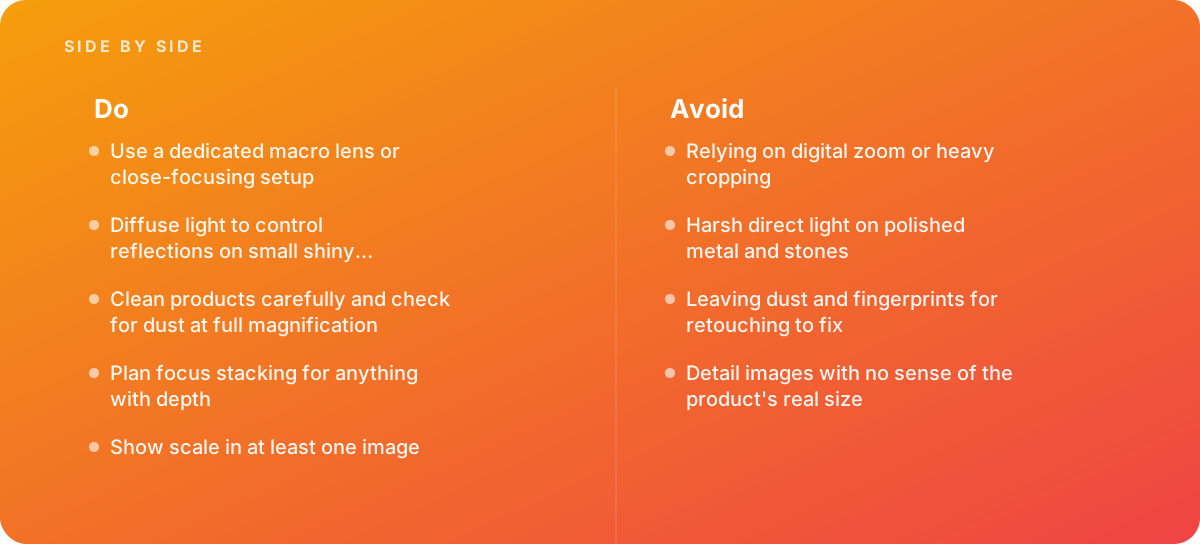
- Use a dedicated macro lens or close-focusing setup
- Diffuse light to control reflections on small shiny surfaces
- Clean products carefully and check for dust at full magnification
- Plan focus stacking for anything with depth
- Show scale in at least one image
What should I avoid?
Avoid:
- Relying on digital zoom or heavy cropping
- Harsh direct light on polished metal and stones
- Leaving dust and fingerprints for retouching to fix
- Detail images with no sense of the product's real size
When should I get help?
Short answer Bring in help when photographing jewelry, watches or tiny components for large zoom images, or when reflections make detail unreadable.
Where this comes from
- Capture One — Learning resources for product photography
- Adobe Help Center — Combine images with Auto-Blend Layers
The figures and practices above come from the sources listed.
Working on something like this?
We take on Photography & Product Visuals work for teams who want it done once, properly. Tell us what you are building and we will tell you honestly whether we are the right studio for it. Start a project.
Where to go next
Spotted something wrong? Report an error on this page. We correct on the page and say what changed.