Insurance Claim Documentation Photography: What Actually Works
Photographing damage, assets and conditions for insurance claims and risk surveys.
 MediaScaleUp Editorial Team
Where most projects go wrong
The usual mistakes:
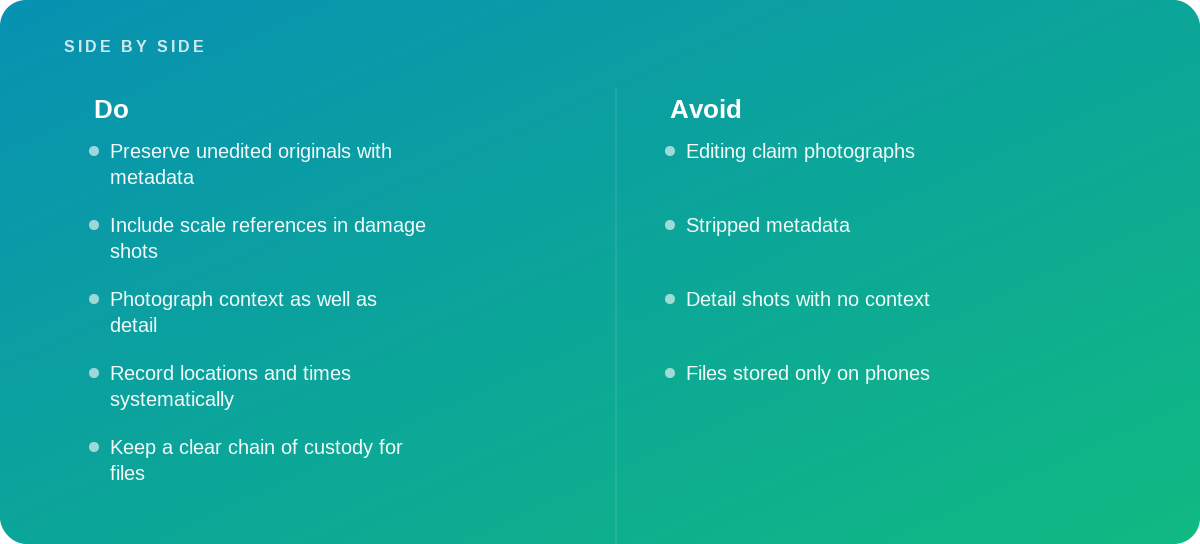
- Editing claim photographs
- Stripped metadata
- Detail shots with no context
- Files stored only on phones
What good looks like instead
- Preserve unedited originals with metadata
- Include scale references in damage shots
- Photograph context as well as detail
- Record locations and times systematically
- Keep a clear chain of custody for files
Why it matters
Claim photographs are evidence, so accuracy, dates and unedited originals matter more than presentation.
The specs that matter
| Measure | Figure |
|---|---|
| Metadata | date and location data support evidence value |
| Originals | unedited files should be preserved |
| Scale | reference objects show the size of damage |
| Coverage | wide and detail shots together tell the story |
Knowing when to hand it over
Tip: Bring in help when photography supports claims or disputes.
Where this comes from
- IPTC — Photo Metadata Standard
- National Association of Insurance Commissioners — Model laws
The figures and practices above come from the sources listed.
Working on something like this?
We take on Photography & Product Visuals work for teams who want it done once, properly. Tell us what you are building and we will tell you honestly whether we are the right studio for it. Start a project.
Where to go next
Spotted something wrong? Report an error on this page. We correct on the page and say what changed.