How to Get Customer Lifetime Value Right
An estimate of the total revenue or profit a customer generates over their relationship with a business.
 MediaScaleUp Editorial Team

At a glance
- Inputs average order value, purchase frequency, retention and margin
- Revenue or profit profit-based lifetime value is more useful for decisions
- Cohorts calculating by acquisition cohort shows changes over time
- Relationship to CAC compared with customer acquisition cost
Why it matters
Why it matters: Knowing lifetime value tells a business how much it can afford to spend acquiring customers and which customers are worth retaining.
Best practice
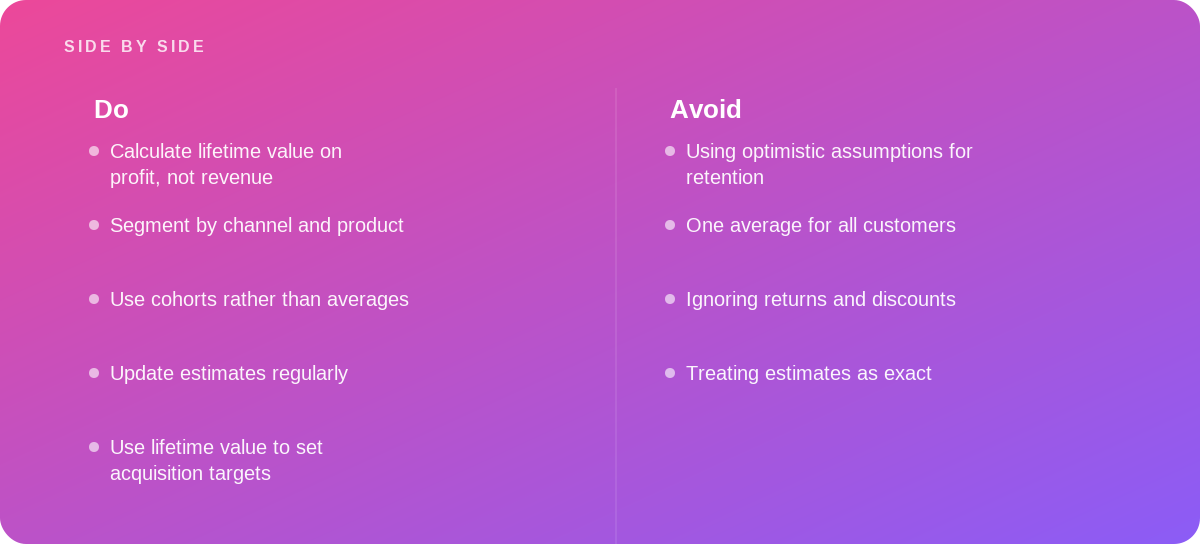
- Calculate lifetime value on profit, not revenue
- Segment by channel and product
- Use cohorts rather than averages
- Update estimates regularly
- Use lifetime value to set acquisition targets
Common pitfalls
Watch out for:
- Using optimistic assumptions for retention
- One average for all customers
- Ignoring returns and discounts
- Treating estimates as exact
When to call in a specialist
Bottom line Bring in help when setting marketing budgets, or when channel costs rise faster than revenue.
Where this comes from
- Google Analytics Help — User lifetime
- Google Ads Help — About customer lifetime value goals
The figures and practices above come from the sources listed.
Working on something like this?
We take on Digital Marketing & CRO work for teams who want it done once, properly. Tell us what you are building and we will tell you honestly whether we are the right studio for it. Start a project.
Where to go next
Spotted something wrong? Report an error on this page. We correct on the page and say what changed.