DDoS Mitigation Basics, Done Properly
Protecting a site against attacks that overwhelm it with traffic.
 MediaScaleUp Editorial Team

Where most projects go wrong
The usual mistakes:
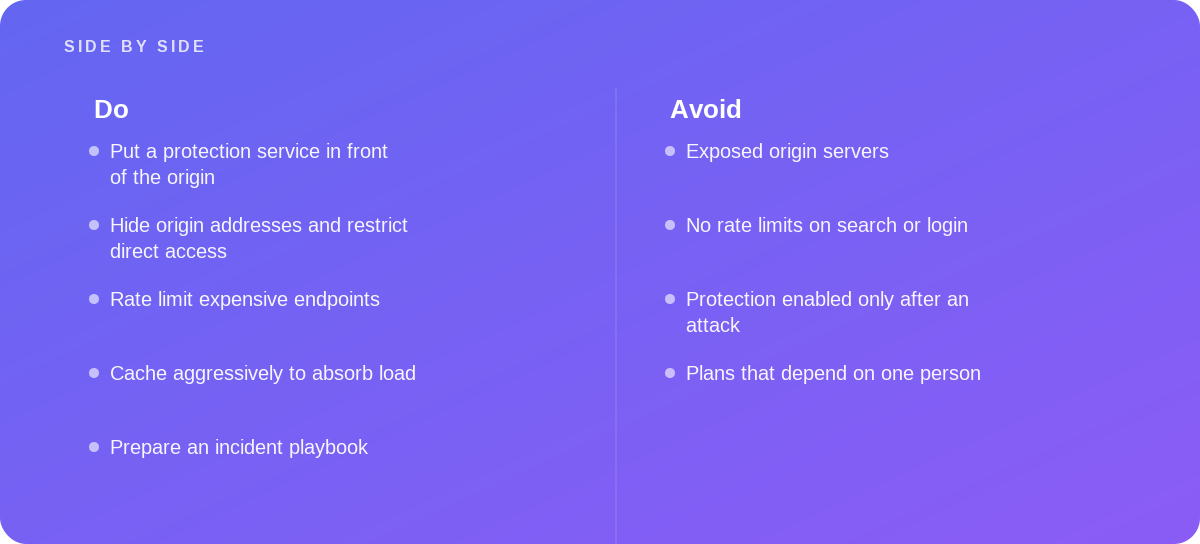
- Exposed origin servers
- No rate limits on search or login
- Protection enabled only after an attack
- Plans that depend on one person
What good looks like instead
- Put a protection service in front of the origin
- Hide origin addresses and restrict direct access
- Rate limit expensive endpoints
- Cache aggressively to absorb load
- Prepare an incident playbook
Why it matters
Attacks are cheap to launch, and unprotected origins go down long before the attack costs the attacker anything.
The specs that matter
| Measure | Figure |
|---|---|
| Volumetric attacks | flood bandwidth or connections |
| Application attacks | target expensive endpoints with fewer requests |
| Origin exposure | attackers bypass protection if the origin IP is known |
| Rate limiting | protects expensive endpoints |
Knowing when to hand it over
Tip: Bring in help when downtime has serious business cost.
Where this comes from
- Cloudflare Learning Center — What is a DDoS attack?
- National Cyber Security Centre — Denial of service guidance
The figures and practices above come from the sources listed.
Working on something like this?
We take on Web Design & Development work for teams who want it done once, properly. Tell us what you are building and we will tell you honestly whether we are the right studio for it. Start a project.
Where to go next
Spotted something wrong? Report an error on this page. We correct on the page and say what changed.






