Shipping Times and the FTC Mail Order Rule Explained
The Federal Trade Commission rule that governs shipping promises for goods ordered online, by mail or by phone, including what a seller must do when an order will be late.
 Marcus Adeyemi

What is at stake
Shipping claims on product pages and at checkout are legal promises, and the rule sets out what customers must be told and offered when a delay happens.
The playbook
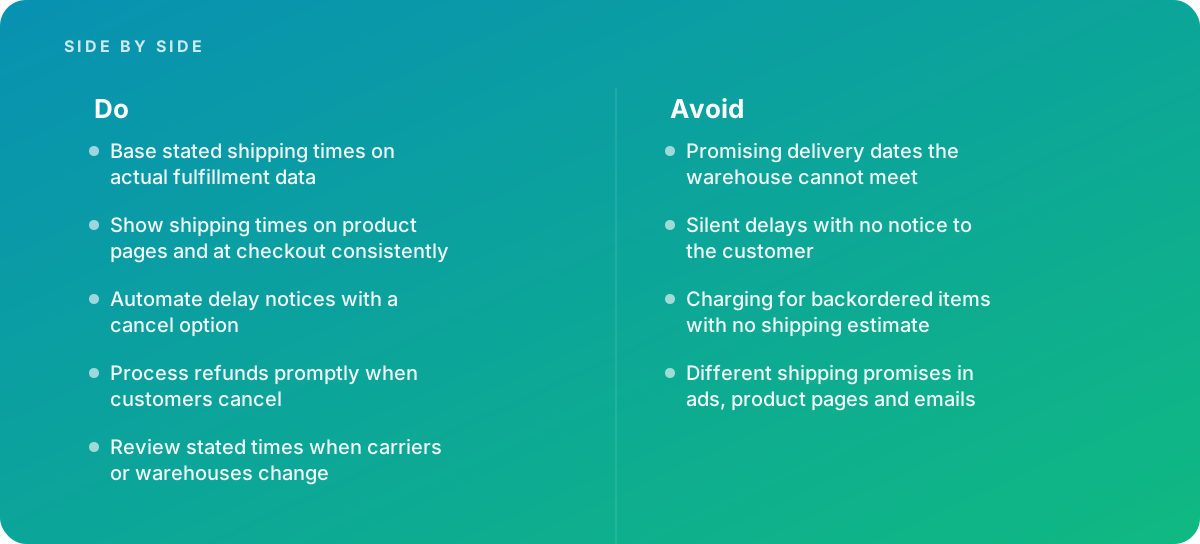
- Base stated shipping times on actual fulfillment data
- Show shipping times on product pages and at checkout consistently
- Automate delay notices with a cancel option
- Process refunds promptly when customers cancel
- Review stated times when carriers or warehouses change
Where it goes wrong
Avoid:
- Promising delivery dates the warehouse cannot meet
- Silent delays with no notice to the customer
- Charging for backordered items with no shipping estimate
- Different shipping promises in ads, product pages and emails
The numbers behind it
| Measure | Figure |
|---|---|
| Rule | Mail, Internet, or Telephone Order Merchandise Rule |
| When to ship | within the time stated, or within 30 days if no time is stated |
| Reasonable basis | the seller must have a reasonable basis for any shipping time it states |
| Delays | the customer must be notified and given the option to cancel for a full refund |
| Refunds on card payments | credited within one billing cycle after cancellation |
Getting outside help
When to hand it over: Bring in help when backorders or supply problems affect many orders, or when shipping promises differ across channels.
Where this comes from
- Federal Trade Commission — Business Guide to the Mail, Internet, or Telephone Order Merchandise Rule
The figures and practices above come from the sources listed.
Working on something like this?
We take on E-commerce Development work for teams who want it done once, properly. Tell us what you are building and we will tell you honestly whether we are the right studio for it. Start a project.
Where to go next
Spotted something wrong? Report an error on this page. We correct on the page and say what changed.